Parents' Guide
Welcome to the MuslimPhonics adventure! Here is how we guide your child, step by step, from their very first sound all the way to reading.
1. We learn the sounds, not the letter names
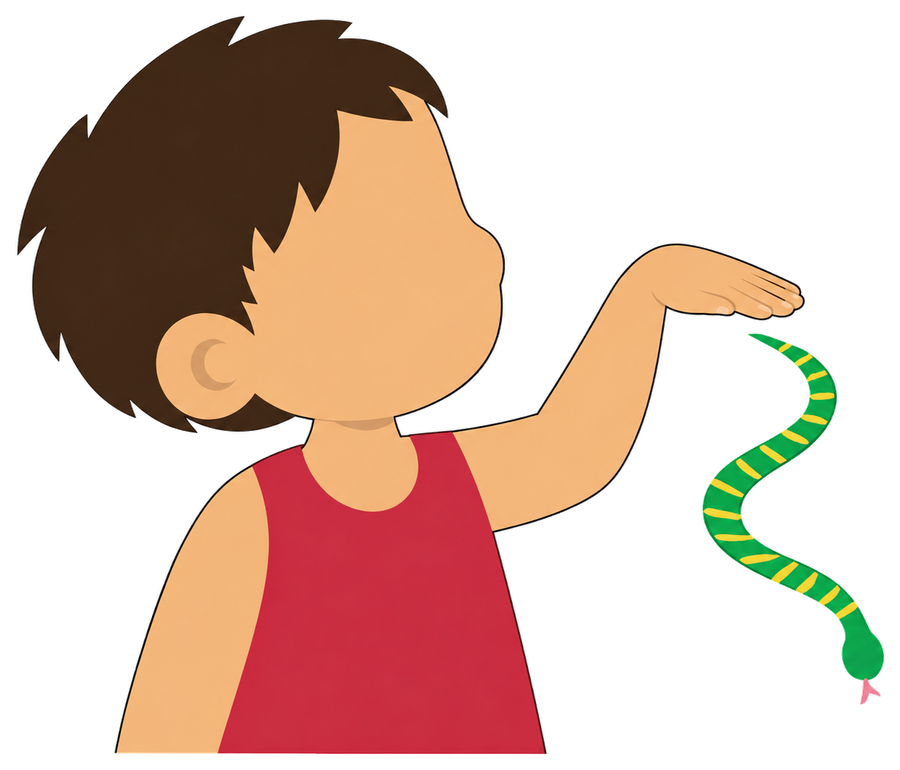
To learn to read, your child does not recite the alphabet. First, they discover the sounds that letters make. S is not called “ess”: it hisses “ssss”, like a snake!
English has 42 sounds. Your child discovers them one by one, in 7 stages called sets. Each sound comes with its own story and an action to copy: for S, the hand wiggles like a snake while we hiss “ssss”. The action helps the sound stay in memory for good.
2. Why start with s, a, t, p, i, n?
Because with these six sounds, reading becomes real straight away. As soon as your child knows them, they can blend their first real words:
at, an, it, in, sat, sap, sit, sip, sin, tap, tan, tip, tin, pat, pan, pit, pip, pin, nap, nip, nitAnd by adding an s or putting two consonants together: ants, pants, snap, spin, taps, tips…
🎉 How proud they feel, reading on their own in the very first weeks!
3. One book, one sound: how each book is built
Each book opens with a story that brings the sound to life and makes your child want to hear it again and again. Then every page has a clear mission:
Listening and repeating. Your child says the sound, spots it in words and builds their vocabulary.
Learning with the hands. Your child shapes the letter with play dough. Every child learns in their own way: some remember what they see, others what they hear, others need to move. By using all the senses (sight, hearing, speech, touch and movement), the method adapts to every child. That is why this multisensory approach is especially recommended for neurodivergent children: no child is left behind.
Tracing. Your child follows the model and writes the letter with the right movement.
Reading at last! Your child places a finger on each dot and says the sound learnt in the story. Book after book, the sounds join together to make words.
💡 The secret of English: CVC words. A CVC word is a consonant, a vowel, a consonant: cat, sun, pig, bed… Each letter sounds exactly as it was learnt; your child simply blends the sounds. Unlike languages full of silent letters, such as French, English has hundreds of CVC words your child can read from the very first sounds. A wonderful springboard into reading! To find out more and practise: The famous CVC Cards (article in French).
Listening and understanding. Your child listens to the instructions in English, then tries to do what is asked. No need to understand everything: sometimes one word is enough. They hear snake and green, and their brain makes the link: they colour the snake green! That is how the ear gets sharper. The voices change on purpose from one story to the next, so your child gets used to different English accents, from the easiest to the hardest.
Daring to speak. Your child describes the picture out loud and records themselves. If needed, they can watch the model video for inspiration. And of course, they can repeat these activities as many times as they like.
💙 MuslimPhonics is a little family. Children send us their recordings and drawings, and we share them, with their parents' permission, in our album Our Little MuslimPhonics Family. A lovely motivation to keep going!
Keeping the sound close. One letter to stick in a little notebook by the bed, to look through for a few minutes before sleeping, and another on the bedroom wall. The sound settles in… without your child even noticing!
The big challenge. The goal: read the sounds quickly and without hesitating. With each story, your child moves forward on the path, until all 42 sounds are conquered!
4. The path of the 42 sounds
The sounds are grouped into 7 sets. Each set brings new words to read.
| Set | Sounds |
|---|---|
| 1 | s, a, t, p, i, n |
| 2 | c/k, e, h, r, m, d |
| 3 | g, o, u, l, f, b |
| 4 | ai, j, oa, ie, ee, or |
| 5 | z, w, ng, v, oo (book), oo (moon) |
| 6 | y, x, ch, sh, th (thin), th (this) |
| 7 | qu, ou, oi, ue, er, ar |
Guide des parents
Bienvenue dans l'aventure MuslimPhonics ! Voici comment nous accompagnons votre enfant, pas à pas, de son tout premier son jusqu'à la lecture.
1. On apprend les sons, pas le nom des lettres
Pour apprendre à lire, votre enfant ne récite pas l'alphabet. Il découvre d'abord les sons que font les lettres. Le S ne s'appelle pas « esse » : il siffle « ssss », comme un serpent !
L'anglais compte 42 sons. Votre enfant les découvre un par un, en 7 étapes appelées sets. Chaque son arrive avec sa propre histoire et un geste à mimer : pour le S, la main ondule comme un serpent pendant qu'on siffle « ssss ». Le geste aide le son à s'ancrer durablement dans la mémoire.
✨ 2. Pourquoi commencer par s, a, t, p, i, n ?
Parce qu'avec ces six sons, la lecture devient réelle tout de suite. Dès que votre enfant les connaît, il peut assembler ses premiers vrais mots :
at, an, it, in, sat, sap, sit, sip, sin, tap, tan, tip, tin, pat, pan, pit, pip, pin, nap, nip, nitEt en ajoutant un s ou en accolant deux consonnes : ants, pants, snap, spin, taps, tips…
🎉 Quelle fierté de lire tout seul, dès les premières semaines !
📖 3. Un livre, un son : comment chaque livre est construit
Chaque livre s'ouvre sur une histoire qui fait vivre le son et donne envie à l'enfant de l'entendre encore et encore. Ensuite, chaque page a une mission bien précise :
Écouter et répéter. Votre enfant prononce le son, le repère dans des mots et enrichit son vocabulaire.
Apprendre avec les mains. Il modèle la lettre en pâte à modeler. Chaque enfant apprend à sa façon : certains retiennent ce qu'ils voient, d'autres ce qu'ils entendent, d'autres encore ont besoin de bouger. En sollicitant tous les sens (la vue, l'ouïe, la parole, le toucher et le mouvement), la méthode s'adapte à chaque enfant. C'est pour cela que cette approche multisensorielle est particulièrement recommandée pour les enfants neuroatypiques : aucun enfant n'est laissé de côté.
Tracer. Il suit le modèle et écrit la lettre avec le bon geste.
Lire, enfin ! Il pose son doigt sur chaque point et prononce le son appris dans l'histoire. Au fil des livres, les sons se rejoignent et forment des mots.
💡 Le secret de l'anglais : les mots CVC. Un mot CVC, c'est une consonne, une voyelle, une consonne : cat, sun, pig, bed… Chaque lettre se prononce exactement comme on l'a apprise, il suffit d'enchaîner les sons. Contrairement au français, où les lettres muettes et les sons composés sont partout, l'anglais compte des centaines de mots CVC que l'enfant peut lire dès ses premiers sons. C'est un formidable tremplin vers la lecture ! Pour en savoir plus et vous entraîner : Les fameuses CVC Cards.
Écouter et comprendre. Votre enfant écoute la consigne en anglais, puis essaie de faire ce qu'on lui demande. Pas besoin de tout comprendre : parfois, un seul mot suffit. Il entend snake et green, et son cerveau fait le lien : il colorie le serpent en vert ! C'est ainsi que l'oreille s'affine. Les voix changent volontairement d'une histoire à l'autre pour que votre enfant s'habitue aux différents accents anglais, des plus faciles aux plus difficiles.
Oser parler. Votre enfant décrit l'image à voix haute et s'enregistre. S'il en a besoin, il peut regarder la vidéo modèle pour s'inspirer. Et bien sûr, il peut recommencer ces activités autant de fois qu'il le souhaite.
💙 MuslimPhonics, c'est une petite famille. Les enfants nous envoient leurs audios et leurs dessins, et nous les publions, avec l'accord des parents, dans notre album Our Little MuslimPhonics Family. Une belle motivation pour progresser !
Garder le son près de lui. Une lettre à coller dans un petit cahier près du lit, à feuilleter quelques minutes avant de dormir, et une autre au mur de sa chambre. Le son s'installe… sans même qu'il s'en rende compte !
Le grand défi. Le but : lire les sons vite et sans hésiter. À chaque histoire, votre enfant avance sur le chemin, jusqu'à conquérir les 42 sons !
🗺️ 4. Le chemin des 42 sons
Les sons sont regroupés en 7 sets. Chaque set apporte de nouveaux mots à lire.
| Set | Sons |
|---|---|
| 1 | s, a, t, p, i, n |
| 2 | c/k, e, h, r, m, d |
| 3 | g, o, u, l, f, b |
| 4 | ai, j, oa, ie, ee, or |
| 5 | z, w, ng, v, oo (book), oo (moon) |
| 6 | y, x, ch, sh, th (thin), th (this) |
| 7 | qu, ou, oi, ue, er, ar |
دليل الآباء
مرحبا بكم في عالم MuslimPhonics!
في هذا الدليل، ستتعرفون على طريقتنا في مرافقة طفلكم، خطوة خطوة. سيبدأ بتعلم الأصوات، ليصل إلى قراءة كلمات بسيطة.
1. نتعلم أصوات الحروف، لا أسماءها
سيتعرف طفلكم من خلال هذا البرنامج على اثنين وأربعين صوتا، واحدا تلو الآخر. تتوزع هذه الأصوات على سبع مجموعات تسمى بالإنجليزية sets. سيبدأ طفلكم بالتعرف على أصوات الحروف، قبل حفظ أسمائها. ولكل صوت قصة خاصة وحركة سيقلدها. فمثلا، عند تعلم الحرف S، لن نقول اسمه «إس»، بل سننطق صوته «سسس»، كصوت الثعبان، وسنحرك اليد بحركة تشبه حركته. ستساعد هذه الحركة على تثبيت الصوت في ذاكرته.
2. لماذا نبدأ بأصوات s, a, t, p, i, n؟
لأن هذه الأصوات الستة ستمكن طفلكم من قراءة كلمات بسيطة. فبمجرد أن يتعلمها، سيستطيع دمجها لقراءة كلمات مثل:
at, an, it, in, sat, sap, sit, sip, sin, tap, tan, tip, tin, pat, pan, pit, pip, pin, nap, nip, nitوبإضافة الحرف s في نهاية بعض الكلمات، أو بدمج أصوات صامتة متتالية، سيستطيع قراءة كلمات أخرى، مثل:
ants, pants, snap, spin, taps, tips…🎉 يا لها من فرحة عندما يستطيع طفلكم قراءة كلماته الأولى بنفسه!
3. كتاب لكل صوت: ماذا سنجد في كل كتاب؟
يبدأ كل كتاب بقصة مشوقة تقدم الصوت وتشجع الطفل على الاستماع إليها مرة بعد مرة. ثم تأتي أنشطة متنوعة، لكل منها هدف واضح:
الاستماع والتكرار
سيستمع طفلكم إلى الصوت ويكرره، وسيتعرف عليه في الكلمات، ويتعلم مفردات جديدة.
التعلم باللعب
سيصنع طفلكم شكل الحرف بالصلصال، ويتعلم من خلال اللعب والحركة. فلن يكتفي برؤية الحرف وسماع صوته، بل سينطقه ويشكله بيديه أيضا. هذا التنوع في الأنشطة يتيح لكل طفل أن يتعلم بما يناسب احتياجاته، ويمنح الأطفال الذين تختلف طرق تعلمهم فرصا أكثر للمشاركة والتقدم.
الكتابة
سيتعلم كتابة الحرف خطوة خطوة، مستعينا بالنموذج ليعرف من أين يبدأ وكيف يحرك القلم.
هيا نقرأ!
سيضع طفلكم إصبعه على كل نقطة، وينطق الصوت الذي تعلمه في القصة. ومع كل كتاب جديد، سيتعلم أصواتا جديدة ويجمعها ليقرأ كلمات.
💡 ما هي كلمات CVC؟
هي كلمات قصيرة من ثلاثة أحرف: حرف صامت، ثم حرف ينطق مثل الحركة، ثم حرف صامت. يرمز C إلى الحرف الصامت، ويرمز V إلى الحركة، مثل:
cat, sun, pig, bed…
سيتعلم طفلكم نطق أصوات الحروف في الكلمة، ثم وصلها ليقرأ الكلمة كاملة. وكلما تعلم أصواتا جديدة، استطاع قراءة كلمات أكثر!
للمزيد من المعلومات والتدريب، يمكنكم الاطلاع على مقال CVC Cards باللغة الفرنسية.
الاستماع والفهم
سيستمع طفلكم إلى تعليمات بالإنجليزية ويحاول تنفيذها. لن يكون عليه أن يفهم كل كلمة؛ فقد تكفيه كلمة أو كلمتان ليعرف ما يفعل. فمثلا، إذا سمع snake وgreen وفهم معناهما، سيعرف أن عليه تلوين الثعبان باللون الأخضر!
ومع تكرار هذه الأنشطة، سيفهم طفلكم ما يسمعه بسهولة أكبر. وفي كل قصة، سيسمع أصواتا مختلفة ويتعرف على لهجات إنجليزية متنوعة. سنبدأ بما يسهل عليه فهمه، ثم نزيد الصعوبة تدريجيا.
التحدث بثقة
سيتحدث طفلكم عما يراه في الصورة ويسجل صوته. وإذا احتاج إلى المساعدة، فيمكنه مشاهدة مقطع فيديو يوضح له كيف يصفها. وله أن يحاول مرة بعد مرة، وأن يعيد هذه الأنشطة كلما أراد.
💙 Our Little MuslimPhonics Family — عائلتنا الصغيرة في MuslimPhonics
ألبوم نجمع فيه تسجيلات الأطفال ورسوماتهم، وننشرها بموافقة الآباء. يفرح الأطفال برؤية أعمالهم فيه، ويتحمسون لتعلم المزيد!
القص واللصق
سيقص طفلكم الحرف ويلصقه في دفتر صغير، ثم يضع الدفتر بجانب سريره ليراجع ما تعلمه قبل النوم. ويمكنه أيضا تعليق الحرف على جدار غرفته. وكلما رآه، تذكر صوته… دون أن يشعر أنه يراجع!
تحدي القراءة
سيتحدى طفلكم نفسه لينطق أصوات الحروف بسرعة ودون تردد. ومع كل قصة، سيقترب من الهدف: إتقان الأصوات جميعها!
4. رحلة تعلم الأصوات
تتوزع الأصوات على سبع مجموعات. ومع كل مجموعة جديدة، سيستطيع طفلكم قراءة المزيد من الكلمات!
| المجموعة | الأصوات |
|---|---|
| 1 | s, a, t, p, i, n |
| 2 | c/k, e, h, r, m, d |
| 3 | g, o, u, l, f, b |
| 4 | ai, j, oa, ie, ee, or |
| 5 | z, w, ng, v, oo (book), oo (moon) |
| 6 | y, x, ch, sh, th (thin), th (this) |
| 7 | qu, ou, oi, ue, er, ar |